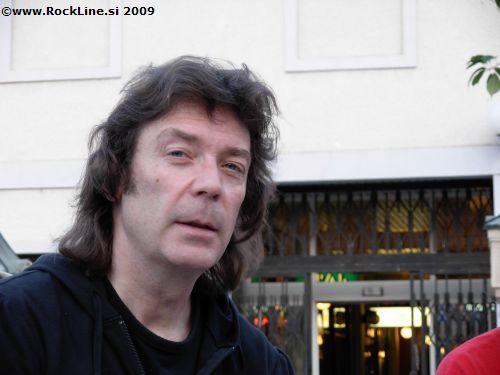
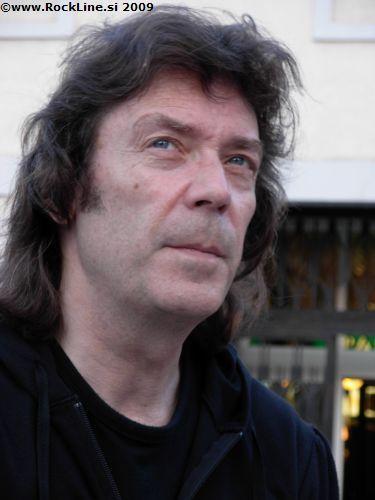
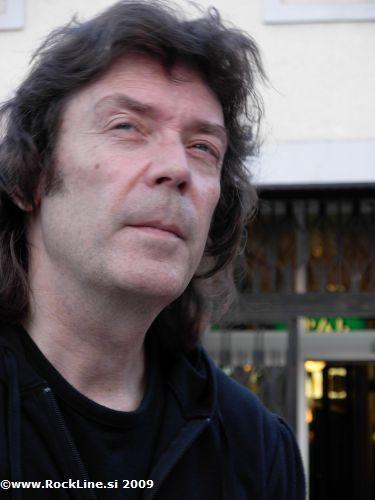
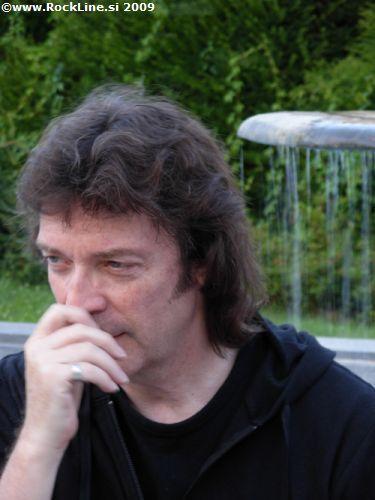
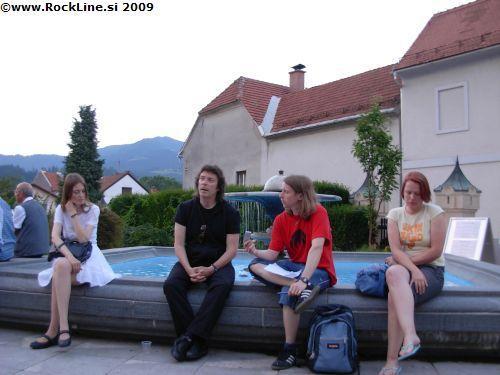
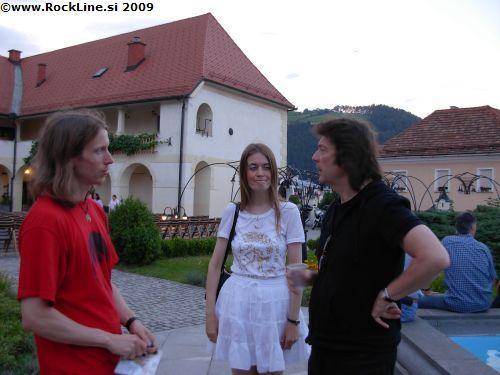
Mjesto: Slovenj Gradec, Slovenija
Datum intervjua: 17.07.2009
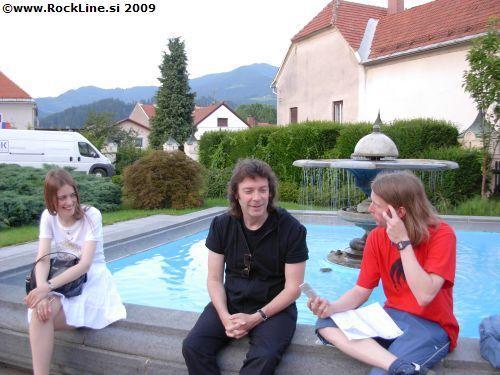
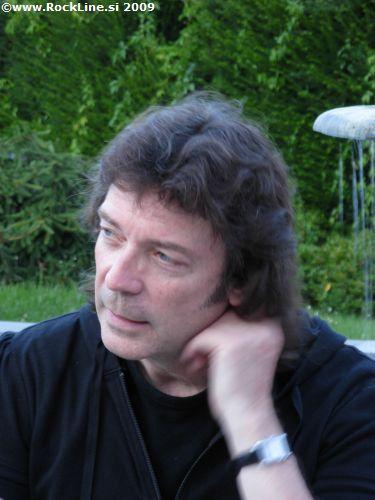
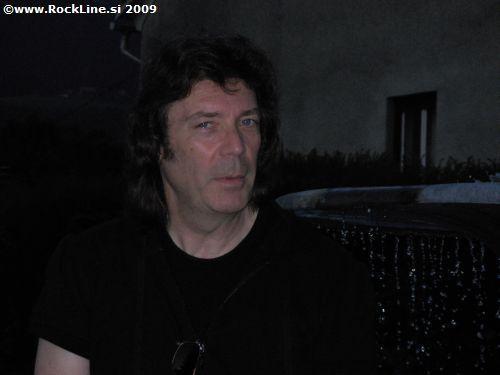
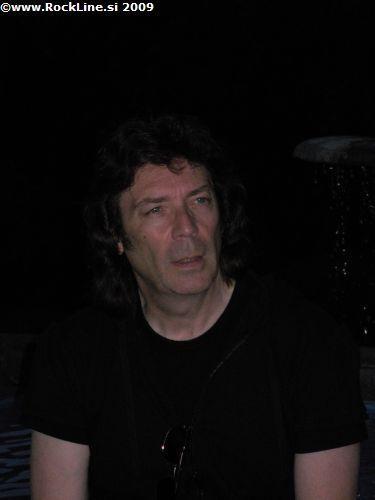
Steve Hackett je najprije postao poznat kao gitarist grupe Genesis, kojoj se pridružio 1970. i s njima snimio šest studijskih albuma. Nakon albuma Wind and Wuthering spakirao je kofere i napustio postavu, a potom je uslijedila iznimno raznolika solo karijera koja traje i danas. Usput je sudjelovao i u supergrupi GTR (sa Steveom Howeom), a odnedavno nastupa i s mađarskom grupom Djabe. Nema sumnje da je riječ o jednom od najboljih i najutjecajnijih gitarista uopće. Bila mi je čast što sam mogao razgovarati s njim prije njegova nastupa s Djabe u Slovenj Gradecu.
RockLine: Kako ste?
Steve Hackett: OK. Jako dobro, hvala.
RockLine: Možete li mi reći nešto o Djabe? Što vas je privuklo u njihovoj glazbi?
Steve Hackett: Prvo sam surađivao s Attilom, koji je bio distributer jednog solo albuma u Mađarskoj. Kad su došli svirati u London, svirao sam s njima. Bilo je jako lako, slobodno i iskustvo mi se svidjelo. Pomislio sam da bi bilo lijepo to ponoviti. Kasnije su me nazvali jer im je umro udaraljkaš (Sipos Andras). U Budimpešti su imali koncert u njegovu čast i ja sam također nastupio. Svirao sam na električnoj i klasičnoj gitari. Na pozornici je bilo puno ljudi koji su stalno dolazili i odlazili. Nastup je bio jako dobar. Iskustvo je bilo doista lijepo, a atmosfera nabijena emocijama. S njima rado sviram i angklung. Svaki koncert je drukčiji. Ponekad sviram i ne znam što slijedi. Zbilja je nepredvidljivo. Uglavnom improviziramo, pa imamo puno slobode. U njihovoj glazbi primjećuju se jazz, world music, fusion, nešto progresivnog. Mislim da je po duhu riječ o jazzu, ali primjećuje se i romska glazba i improvizacija. Sve to imam s njima zajedničko.
RockLine: Dakle, uživate svirati s njima?
Steve Hackett: Da. Zajedno sviramo već prilično dugo. Odsvirao sam već popriličan broj koncerata s njima. Nedavno sam bio na turneji sa svojim sastavom i svirao sam i na tim nastupima. Sa svojom postavom idući tjedan idem na turneju po Italiji. S Djabe još sviramo u Grazu, u Austriji. Već smo bili u Dubrovniku, što je bilo jako lijepo jer tamo nikad prije nisam bio.
RockLine: Jeste li ikad prije bili u Sloveniji?
Steve Hackett: Ne, ovo je prvi put?
RockLine: Niste ovdje bili ni s Genesis?
Steve Hackett: Ne, ni s njima.
RockLine: Primijetio sam da često svirate nastupe u Italiji. Znači li to da ste posebno vezani za Italiju?
Steve Hackett: Jako sam vezan za Italiju i mislim da Talijani jako cijene ne samo stvari koje sviramo danas, nego i ideje koje smo imali s ranim Genesis. To je bilo prvo područje koje se doista odazvalo na Genesis. Genesis su tamo postali slavni prije nego igdje drugdje.
RockLine: Nekako slično kao Van Der Graaf Generator.
Steve Hackett: Mislim da da.
RockLine: Smeta li vas ikad što ljudi o vama još uvijek govore kao o gitaristu Genesis?
Steve Hackett: Ne, to mi je drago. To je bio važan dio mog razvoja i glazba koju sam svirao s Genesis i dalje mi je jako draga. Bilo je tu dobrih ideja, dobrih glazbenika, dobrih pjesama, a i dobrih prijatelja.
RockLine: Dakle, niste se razišli neprijateljski?
Steve Hackett: Ne, uopće ne. Mislim da smo tada svi smatrali da je to pravi korak. Svi se međusobno poštujemo kao glazbenike i kao pojedince.
RockLine: Što je s ponovnim okupljanjem Genesis? Jeste li pogledali koji nastup?
Steve Hackett: Ne, nisam vidio, ali čuo sam da je bilo jako dobro. Drago mi je da se to dogodilo. Razgovarali smo s Peterom Gabrielom o tome da bi izveo The Lamb Lies Down on Broadway. Možda jednog dana, ali trenutno smo prezaposleni drugim stvarima.
RockLine: Mislite li da je dobra ideja vraćati se 35 godina u prošlost ili biste radije išli naprijed i napravili nešto posve novo?
Steve Hackett: Zanimljivo je to, zar ne? Mislim da je za glazbenike koji se moraju iznova dokazivati novo uvijek najbolje. Glazbenik uvijek gleda naprijed, svaki put pokušava stvoriti nešto novo. Publika uvijek želi opet imati šesnaest godina, pa je naglasak uvijek na prošlosti, s ciljem da se uživa u glazbi koju si slušao kad si bio jako mlad. I sam sam slušao određene izvođače kad sam bio mlad i ta mi glazba znači više od svega što bi mogli napraviti danas jer se želim vratiti u adolescenciju, kad ti hormoni podivljaju i neprestano sanjariš.
RockLine: Je li i glazba Genesis imala kakve veze s hormonima?
Steve Hackett: Pa, sve što smo radili s Genesis bilo je potpuno aseksualno. Sve smo uzimali iz knjiga, bez strasti.
RockLine: Osobito je aseksualna bila odjeća Petera Gabriela.
Steve Hackett: Upravo tako.
RockLine: Znam da je tada bilo mnogo sukoba zbog Peterovih kostima. Jeste li bili jedan od onih koji su bili protiv toga što je radio?
Steve Hackett: Nikad se nisam žalio na to. Mislim da je bilo nužno da to radi jer smo svirali jako zahtjevnu glazbu koja se gotovo nikome nije sviđala, sve dok se nije počeo prerušavati, a onda se odjednom i glazba ljudima počela sviđati. Jako je važno imati pjevača koji zna komunicirati s hormonima publike, koji te hormone zna i zbuniti.
RockLine: Ali Genesis nikad nisu bili tako popularni dok je Peter bio pjevač kao kad je to radio Phil.
Steve Hackett: S Peterom nismo bili tako popularni. Kad nas je bilo četvero, bili smo malo uspješniji, a još veći uspjeh doživjeli su kao trojac. No kad se ljudi danas zanimaju za Genesis, najviše ih zanima što smo radili kad nas je bilo petero. Uglavnom ih zanima to razdoblje zbog sposobnosti pojedinaca. Sad to više cijene nego tada kad je bilo aktualno. To je često tako u svim granama kreativne umjetnosti.
RockLine: Zar vam se ne čini ironičnim da ste najveće uspjehe postigli kad ste se razišli? Peter je bio popularan kao solo izvođač, vi ste doživjeli lijep uspjeh s GTR, a Genesis su također požnjeli lijepe uspjehe s albumima poput Invisible Touch.
Steve Hackett: Ako želiš imati hitove, obično dobiješ i igru koja te hitove prati. Obično to znači kompromise, a ja ne volim kompromise u glazbi jer bismo inače svi radili stvari koje podupiru korporacije. Mislim da je važno biti otvoren za nove stvari. Zanimljiva stvar, zar ne? Cijelo vrijeme se radi o mitologijama. Ponekad publika prihvati djelo umjetnika, a ponekad ga odbaci. Ponekad sami umjetnici kažu: “Napravio sam ovaj album i bio je užasan. Ništa nije funkcioniralo.” Publika može misliti da je to božanstveno, dok umjetnik može smatrati da je pakleno. Slično je i s nastupima uživo jer nitko ne zna o čemu ljudi razmišljaju kad su na pozornici. A sviraš li i ti?
RockLine: Sviram s vremena na vrijeme, ali sam prilično loš.
Steve Hackett: A uživaš li u tome?
RockLine: Ja da, ali mislim da nitko drugi ne uživa.
Steve Hackett: Zbilja? Pa, mislim da je najvažnije da sam uživaš u onome što radiš. Mislim da sam i sam najviše uživao u sviranju gitare kad sam znao odsvirati samo tri akorda. Nisam imao tehniku, ali već same osnove jako su me uzbuđivale. Što više znaš, to više želiš znati. Radi se o beskonačnoj potrazi. Nikad ne možeš napraviti sve što želiš. Nemoguće je.
RockLine: Ranije ste govorili o kompromisima. Jeste li morali činiti puno kompromisa u sastavima u kojima ste djelovali, primjerice Genesis i GTR?
Steve Hackett: Mislim da da. Mislim da je do kompromisa dolazilo jer pokušavaš raditi u situacijama gdje su neke osobnosti teže od drugih. Uvijek sam osjećao da ja moram biti to vezivo i da moram iz drugih ljudi izvući ono najbolje. Uvijek sam bio jako nenatjecateljski kad su u pitanju vlastiti doprinosi u grupi, jer kad čujem da netko svira nešto odlično, to mu i kažem. Mislim da je to jako važno, bez obzira na godine glazbenika.
RockLine: Dakle, nikad ne biste pokušali nešto zamijeniti vlastitim dijelom?
Steve Hackett: Ne. Barem mislim da ne bih. Mislim da je grupa jaka koliko su jaki pojedinci. Svatko mora svakome ostaviti dovoljno prostora da svi zajedno možemo zasjati.
RockLine: Što je s vašom solo karijerom? Svirali ste s tako mnogo glazbenika. Kako se prilagođavate sviranju svakog pojedinca?
Steve Hackett: Mislim da je u glazbi uvijek riječ o prilagođavanju. Nedavno sam snimio album s klasičnom gitarom koji se zove Tribute, na kojem sviram Bachove skladbe. To su bile najteže skladbe koje sam ikad svirao, ali isplatilo se jer je glazba tako spektakularna. Cijeli život osjećam strast prema Bachovoj glazbi, a stvari koje pokušavam postići svojim klasičnim projektima on je postigao prije mnogo godina. Ta je glazba divna jer se može primijeniti bilo gdje. Nije važno na kojem je instrumentu sviraš. Zvuči sjajno na svim glazbalima. Mislim da svi glazbenici teže takvim kompozicijama.
RockLine: U Genesis ste najprije bili poznati kao električni gitarist. Kako ste otkrili svoju ljubav prema klasičnoj gitari?
Steve Hackett: Odrastao sam uz The Beatles, The Stones i r’n’b glazbu, a onda sam, kad sam imao 15 godina, čuo kako Segovia svira Bacha na klasičnoj gitari, tako da sam u glazbi uvijek imao dva interesa. Jedan je bila moguća karijera – moje električarske stvari, ali nisam mislio da bi grupa mogla uključiti klasične utjecaje, srednjovjekovne stvari, čak i nešto flamenka, što u zadnje vrijeme radim češće, osobito na novom albumu. Kod grupa koje su se počele pojavljivati u kasnim 60-ima i ranim 70-ima primijetio sam da su takvi utjecaji mogući. U jednoj grupi bilo je moguće uključiti utjecaje klasike, jazza, popa, rocka, bluesa pa čak i humora. Imam sreće što sam rođen u vrijeme kad glazba nije bila banalizirana. U 50-ima, kad sam odrastao, miješanje žanrova u glazbi uopće nije postojalo. Imao si ili operu ili laganu glazbu. Rock se tek rađao iz bluesa. Imao sam sreće što sam živio u vrijeme kad se nije činilo pogrešnim uključiti cijelu glazbenu povijest u jednu pjesmu i još se usput dotaknuti budućnosti. To je na neki način bilo nadrealno, a istodobno magično.
RockLine: Jesu li vam Genesis zadovoljili oba ta vida?
Steve Hackett: Iskreno govoreći, nikad nisam potpuno zadovoljan i nikad nisam bio potpuno zadovoljan jednim jedinim sastavom. Kad imaš glazbene snove, uvijek ih juriš i mogu biti ponosan na mnoge albume koje sam napravio, s Genesis, samostalno i s drugim ljudima, ali moja je duša nemirna i nomadska, pa uvijek osjećam želju za putovanjem i za iskustvima s različitim kulturama na različitim mjestima. Želim proučavati okoliš, kulturu i glazbene razlike. Uvijek mi se čini da me vuče na istok. I kod Djabe postoje određeni takvi elementi, neki prizvuk, osobito s Ferijem, violinistom, koji svira i trubu.
RockLine: Romski utjecaji.
Steve Hackett: Da, u njegovu sviranju doista ima nečeg romskog i on sam snima jako zanimljive albume s romskom glazbom, na kojima je violina vrlo strastvena i divlja. Jako je zanimljivo i kad sviram s njima, svaki je koncert drukčiji. Ponekad mi se čini da sam s njima svirao jako dobro, a ponekad mi se čini da nisam ništa napravio kako treba. Sve to uvijek ocjenjujem jako ljudski. Uvijek jurim glazbeni perfekcionizam.
RockLine: Ranije ste govorili o solo albumu. Najavljuju se dva projekta, zar ne?
Steve Hackett: Snimit ćemo rock album koji će sadržavati mnogo različitih stilova. Izaći će i kao posebno izdanje koje će sadržavati i živi materijal, ali to će biti s mojim vlastitim sastavom. Siguran sam da ću i s Djabe još surađivati. Na albumu će biti puno različitih stvari. Ne mogu se sjetiti još jednog albuma.
RockLine: A što je s projektom Squackett?
Steve Hackett: Pa da, ona stvar s Chrisom Squireom (Yes). Zajedno smo radili na mnogim stvarima. Nadam se da ćemo zajedno raditi u kolovozu, kad dođe u Englesku. Trenutno je i on zaposlen turnejom po Americi. Živimo u različitim zemljama, ali zajedno smo već stvorili nešto odlične glazbe. Veselim se tome.
RockLine: Nedavno smo doživjeli i reizdanja albuma Genesis. Koliko ste zadovoljni onima na kojima ste svirali?
Steve Hackett: Mislim da je produkcija znatno bolja i miksevi zvuče bolje, osobito bubnjevi. Uvijek želim sve promijeniti. Ti su albumi proizvodi vrlo mlade grupe u vrijeme kad smo tražili način da se izrazimo. Stvorili smo nešto vrlo posebno, ali ne savršeno. Ne smiješ očekivati savršenstvo. Meni se, primjerice, sviđaju Beatlesi. U njima ne tražim perfekciju, samo želim opet biti toliko star. Čujem ih tadašnjim ušima. Sve im opraštam jer je ta glazba bila tako bogata i tako važan dio mog života, kao što to za neke ljude vrijedi za Genesis.
RockLine: Možda nesavršenosti čine glazbu zanimljivom.
Steve Hackett: Mislim da je nesavršenost u tome što shvaćaš da smo se svi mučili s tom glazbom. Tako drugi glazbenici mogu reći: “I ja to mogu i to bolje od njih.” Uvijek postoji poziv, štafeta se uvijek predaje mlađim glazbenicima i pjevačima.
RockLine: Je li koji član sastava utjecao na zvuk novih izdanja ili je sve bila zasluga Nicka Davisa?
Steve Hackett: Ako ću iskreno, pustio sam Nicka da radi svoj posao. Ponekad sam mu nešto predložio, ali uglavnom je odradio dobar posao i čujem i više gitare nego prije. Mislim da voli imati gitare u prvom planu i smatram da to dobro funkcionira. No imaš i stara i nova izdanja. Uskoro će izaći i nova izdanja živih snimaka.
RockLine: Jeste li već čuli Seconds Out?
Steve Hackett: Jesam, da.
RockLine: Je li vaša gitara sad kakogod glasnija, jer je u originalu bila prilično tiha?
Steve Hackett: Pa, nisam još usporedio obje snimke jednu uz drugu, ali mislim da zvuče prilično slično.
RockLine: Samo još jedno pitanje. Možete li mi reći nešto o svojoj inspiraciji u glazbi? Je li to ponekad i poezija, književnost?
Steve Hackett: Sve me to inspirira jer na glazbu može utjecati mnogo stvari. Mislim da su mnogi pjevači poznati zbog svoje poezije. Istodobno mislim da postoji i neka zavjera koja nam pokušava dopovjediti što jedan čovjek može učiniti i mi tu ideju moramo promijeniti. Na primjer Bob Dylan. Svi su govorili da ne zna pjevati, a onda je snimio Nashville Skyline s potpuno drukčijim glasom. Dakle, dio stvari koje sam radio u prošlosti bio je povezan s poezijom. Smatram da te gitaristička junaštva ograničavaju. Ne znam koliko bih često mogao slušati cijeli album električne gitare. Slušat ću i pokušati nešto pokupiti, kao neku vrstu rječnika, ali ako želiš imati potpuno zaokruženo glazbeno djelo, moraš imati snažne pjesme i izvrsne aranžmane, kao da svi instrumenti razgovaraju međusobno i rade upravo prave stvari u pravo vrijeme. Ja svojom glazbom pokušavam stvoriti nešto takvo.
RockLine: Hvala.
Steve Hackett: Hvala tebi.
Fotografije: Ivana Kisegi
———————————————————————————————
Steve Hackett first became famous as the guitarist of Genesis, the group he joined in 1970 and recorded six studio albums with. He left after Wind and Wuthering and this was followed by a highly versatile solo career, which is still going on. In between all this, he was also a member of the supergroup GTR (with Steve Howe) and he has recently been performing together with the Hungarian group Djabe. There’s no doubt that he is one of the best and most influential guitarists ever. It was an honour for me to talk to him before his show with Djabe in Slovenj Gradec.
RockLine: How are you doing?
Steve Hackett: OK. Very good, thank you.
RockLine: Can you tell me something about Djabe? What grabbed your attention in their music?
Steve Hackett: Well, first of all I worked with Attila, who was the distributer of a solo product in Hungary. And then, when they were playing in London, I jammed with them. It was very easy, very free and I enjoyed the experience. I thought it would be nice to do it again sometime. They later phoned because their percussionist (Sipos Andras) died. There was a memorial concert in Budapest and I played at that. I was doing some electric and some nylon guitar. They had many people on stage, coming and going all the time. It was a very good show. It was a very good experience and the atmosphere was very emotional. I also like playing these angklungs with them. Every concert is different. Sometimes I play and I wonder what’s going to happen next. It’s very unpredictable. It’s mainly improvised, so it’s very free. There are aspects of jazz, world music, fusion, some progressive. I think that it’s jazz in spirit, but there’s an aspect of gipsy and improvisation. So, we share all of those things.
RockLine: So you’ve been enjoying playing with them?
Steve Hackett: Yes. We’ve been playing for quite some time. I’ve done quite a few shows with them. I’ve recently been touring with my own band and doing those shows. We start a tour of Italy next week. We have one show here with Djabe and another in Graz, in Austria. We already did Dubrovnik. That was very nice. I’ve never been to Dubrovnik.
RockLine: Have you ever been to Slovenia before?
Steve Hackett: No, this is my first time?
RockLine: You’ve never been here with Genesis?
Steve Hackett: No, this is the first time.
RockLine: I notice you travel to Italy a lot. Does that mean you have a fondness for Italy?
Steve Hackett: I have a tremendous fondness for Italy and I think Italy has a fondness for not just the things we play today, but for the ideas we had with early Genesis. It was really the first territory to respond to Genesis in a very big sort of way. Genesis became a famous band there before it was famous anywhere else.
RockLine: The same as with Van Der Graaf Generator.
Steve Hackett: I think so, yes.
RockLine: Does it ever bother you that people still talk of you as the guitarist of Genesis?
Steve Hackett: No, I’m happy to be known as the guitarist of Genesis. It was an important part of my development and I’m still very fond of the music I did with Genesis. There were lots of good ideas, good players, good songs and good friends too.
RockLine: So you didn’t part on bad terms?
Steve Hackett: No, we didn’t part on bad terms. I think it was something we all felt was right. We all respect each other musically and as individuals.
RockLine: What about the reunion? Did you catch any of those shows?
Steve Hackett: I didn’t see that, but I hear it was very good. I’m very pleased that happened. At one point, we were all talking with Peter Gabriel to see if he would do something like The Lamb Lies Down on Broadway. Maybe one day, but at the moment we’re too busy doing other things.
RockLine: Do you think it’s a good idea to revisit stuff you did 35 years ago or would you rather look to the future and do something totally new?
Steve Hackett: It’s very interesting, isn’t it? I think that for musicians who have to reinvent themselves, new is always best. The musician always looks forward, tries to create something new each time. The audience always wants to be sixteen again, so there’s always an emphasis on the past, with the function of enjoying the music you listened to when you were very young. There are artists I listened to when I was very young and that music means more to me than anything they could possibly do today because you want to return to adolescence, where your hormones are raging and your dreams are coming thick and fast.
RockLine: So, did the music of Genesis have anything to do with hormones?
Steve Hackett: Well, everything with Genesis was completely asexual. Everything was learned from books, no passion.
RockLine: The costumes of Peter Gabriel were especially asexual.
Steve Hackett: Exactly.
RockLine: I know that there were many conflicts at the time, about Peter’s costumes. Were you one of the people against him doing that?
Steve Hackett: I never complained about it. I thought it was very necessary for Pete to do that because we were playing very difficult music that nobody really liked until he started dressing up and then suddenly everybody started to like the music. It’s very important to have a front man who is able to speak to people’s hormones, to confuse the hormones.
RockLine: But Genesis were never as popular with Peter as with Phil as the singer.
Steve Hackett: It wasn’t as popular with Peter. It was slightly more popular with the four of us. It was even more popular with the three of them. But now, when people look at Genesis, they’re mostly interested in what we did when there was five of us. The main interest is in that area because of what the individuals did. It’s appreciated more now then when it was current, as is often the case with things in all branches of creative art.
RockLine: Do you perhaps find it ironic that all of you had the most success when you broke up? Peter had a huge solo career, you had a successful album with GTR and Genesis were huge with stuff like Invisible Touch.
Steve Hackett: There’s something that goes with having hits. There’s a game that accompanies it and it’s partly to do with making compromises. But I prefer not to compromise music, otherwise we would always be doing things that are corporately viable. I think it’s important to be open to something that is new. It’s interesting, isn’t it? You’re dealing with mythologies the whole time. Sometimes the public embraces the work of an artist and sometimes they reject it. Sometimes the artists themselves say: “I did that album and it was terrible. Nothing worked.” The audience may think it’s heavenly, while the artist may think it’s hellish. That’s the same with a live concert as well because nobody knows what the people are thinking when they’re on stage. Do you play yourself?
RockLine: I play from time to time, but I’m pretty bad.
Steve Hackett: But you enjoy it?
RockLine: I enjoy it, but I don’t think anybody else enjoys it.
Steve Hackett: Really? Well, I think the most important thing is to enjoy what you do. I think I enjoyed guitar playing most of all when I was able to play just three chords. No technique, but just to be able to manage the basics was very exciting to me. The more you can do, the more you want to be able to do. It’s an endless quest. You can never do everything you really want to do. It’s impossible.
RockLine: You were talking about making compromises before. Did you have to make many compromises in the band projects you were involved with, like Genesis and GTR?
Steve Hackett: I think so, I think there were compromises because you’re trying to work in situations where some personalities are more volatile than others. I always felt my role was to be the glue and to try and bring out the best in other people. As far as my own contributions go, I’ve always been very uncompetitive in a group context because if someone is playing something that sounds great, I always tell them if they’ve played something really good. I think it’s very important, no matter how old musicians are.
RockLine: So you’d never try to replace something with your own part?
Steve Hackett: No. I hope not. I think that a band is only as strong as all the individuals. You all allow each other that space to be able to shine together.
RockLine: What about your solo career? You’ve played with so many different musicians over the years. How do you adjust to the playing of each musician?
Steve Hackett: I think that music is all about adjustment. I recorded an album of classical guitar music, called Tribute, with Bach pieces and I found those the most difficult of all the pieces I’ve done, but I thought it was worth it because the music is so spectacular. The music of Bach is a lifelong passion for me and the things that I try to do in a classical idiom always aspire to the same condition that his music already reached so many years ago. It’s wonderful music because you can transpose it. It is indifferent to the instrument it’s being played on. It sounds marvellous on everything. I think that all musicians aspire to write compositions like that.
RockLine: You were first known as an electric guitarist in Genesis. How did you discover your love for the classical guitar?
Steve Hackett: Many years ago, I grew up listening to The Beatles and The Stones and r’n’b, then when I was 15 I got to hear Segovia play Bach on the nylon guitar, so I always had two interests in music. One of them was a possible career move – which was all of the electric stuff, but I didn’t think a band would be able to incorporate the classical influences, the mediaeval stuff, even some of the Flamenco stuff, which I’ve been doing a bit more of, especially on this new album I’ve just done. What I discovered with bands that started to appear in the late 60s and early 70s, those kinds of influences were possible. It was possible within one band to include classical influences, jazz influences, pop, rock, blues and humour as well. I was very fortunate to be born in a time when music was not trivialised. In the 1950s, when I was growing up, there was no such thing as fusion in music. There was either opera or there was light music. Rock was just starting to be born out of blues. I was lucky to be involved in a time where it was not considered gauche, in the course of one song, to run the gambit of the whole of the history of music and touch on some of the future as well. So, in that way, it was both surreal and magical.
RockLine: So, did Genesis satisfy both of those aspects for you?
Steve Hackett: Well, to tell you the truth, I’ve never really been totally satisfied and I’ve never really been totally satisfied with any one band. When you keep having musical dreams, you’re always chasing them and I can be proud of many of the albums I’ve done, with Genesis, on my own and with other people, but I’m a restless nomadic spirit and I feel the need to travel and experience the different cultures of many places and to examine the terrain, the culture, the musical differences. I always feel I’m being drawn towards the East, in a way, the whole time. Even with Djabe, there’s an aspect, an undercurrent, especially with Feri, the violinist, who also plays the trumpet.
RockLine: The gipsy influences.
Steve Hackett: There’s something gipsy in there, yes and he makes very interesting gypsy albums with very passionate and wild violin. It’s very interesting and when I play with them, every concert is different. I sometimes feel like I played very well with them and at other times I feel like I couldn’t do anything right. I always have a very human assessment of it. I’m always chasing musical perfection.
RockLine: You talked about your solo album earlier. You have two projects coming up, right?
Steve Hackett: We have a rock album coming up, which has many different kinds of styles. We also have a special edition of that, which contains some live material as well, but this is with my own band. I’m sure I’ll continue to do stuff with Djabe. There will be many different things. I can’t think of another album.
RockLine: What about the Squackett thing?
Steve Hackett: Oh yeah, the thing with Chris Squire. He and I have a number of things that we’ve been working on. I hope I’m going to be working with him in August, when he’s over in England. He’s also busy touring in the States. So, we’re living in different countries, but we have some great music we’ve done together. I’m looking forward to that.
RockLine: We’ve had the rereleases of Genesis albums. How are you satisfied with the ones you played on?
Steve Hackett: I think the production sounds much better now and the mixes sound much better, the drums in particular. I always want to change everything. The albums are products of a very young band, in a time when we were struggling to express ourselves. We made something very special, but not perfect. You shouldn’t look for perfection. I like The Beatles, for example. I’m not looking for perfection in them, but I want to be that age again. I hear it with the ears of then. I forgive it everything because it was so rich and such an important part of my life, as I think Genesis is to many people.
RockLine: Perhaps the imperfections make it interesting.
Steve Hackett: I think the imperfection is in knowing that everyone was struggling to do it. It makes it possible for other musicians to say: “Hey, I could do that and I could do it better than them.” There’s always the invitation, the torch is always handed on to younger players and singers.
RockLine: Did any band member influence the mixes or was it Nick Davis alone?
Steve Hackett: To be honest, I let Nick get on with it. I’d sometimes suggest one or two things, but in the main, he does a very good mix and I can hear a lot more guitar than when I originally did it. I think he likes to have the guitars a little louder and it works very well. But you have both the old mixes and the new ones. There’s also a live box set coming out.
RockLine: Have you heard the Seconds Out yet?
Steve Hackett: Yes, I did.
RockLine: So, is your guitar any louder now because it was quite quiet on the original mix?
Steve Hackett: Well, I’m not playing it side by side, but I think it sounds quite similar to the mixes before.
RockLine: Just one more question. Can you tell me something about your inspirations in music? Is it sometimes poetry, literature?
Steve Hackett: It’s all of those things because there are so many ways to influence music. I think many singers are more known for their poetry. At the same time I think that there’s almost a sort of conspiracy which fixes everybody’s idea of what one person does and it’s really up to all of us to change the idea of that. Like Bob Dylan. Everyone was saying that he can’t sing and then he did National Skyline with a different voice entirely, so part of what I’ve done in the past has been involved with poetry. I think guitar heroics can be very limiting. I don’t know how often I would sit down and listen to a whole album of electric guitar. I’ll listen to it to take things from it, as a glossary of terms, but to have a fully rounded piece of music, you have to have powerful songs, exquisite arrangements, almost as if all the instruments are talking to each other and doing exactly the right thing at the right time. So, that’s what I work towards.
RockLine: Thanks.
Steve Hackett: Thank you.
Photos: Ivana Kisegi
Galerija slika